
UCLA

UCLA · Summer research

Beyond the
success rate.

At COSMOS, I tested whether AI theorem provers solve different problems with a stable strategy, not only whether they get the right answer.

Scroll through the story

The question

Two provers can reach the same score in very different ways.

Success rate hides the route an agent takes. One system may use a repeatable plan across problems while another arrives through a scattered process. I wanted a way to tell those behaviors apart.

Working with Prof. HTB at UCLA, I adapted the Behavioral Consistency Metric to Lean theorem-proving agents and turned each proof into a fingerprint of its tactics, structure, and errors.

260,103

Lean proofs analyzed

0.923

Macro F1 on mutation recovery

6

Robustness checks

Field notes

How the work moved.

01

Represent

From proof trees to fingerprints

I extracted structural features from Lean proof attempts and converted them into attribution vectors. Those vectors made it possible to compare strategies geometrically across a large collection of problems.

02

Validate

Make sure the signal is real

Before trusting the metric, I tested it on 260,103 APRIL proofs with known mutation labels. A LightGBM classifier recovered those mutation types at 0.923 macro F1, showing that the fingerprints captured meaningful structure.

03

Compare

Human and machine proof behavior

The analysis found DeepSeek-Prover-V1 substantially more consistent across tasks than a large human Mathlib corpus, then separated it from Goedel-Prover-SFT across six robustness checks.

The summer around the work

Research was only one part of COSMOS.

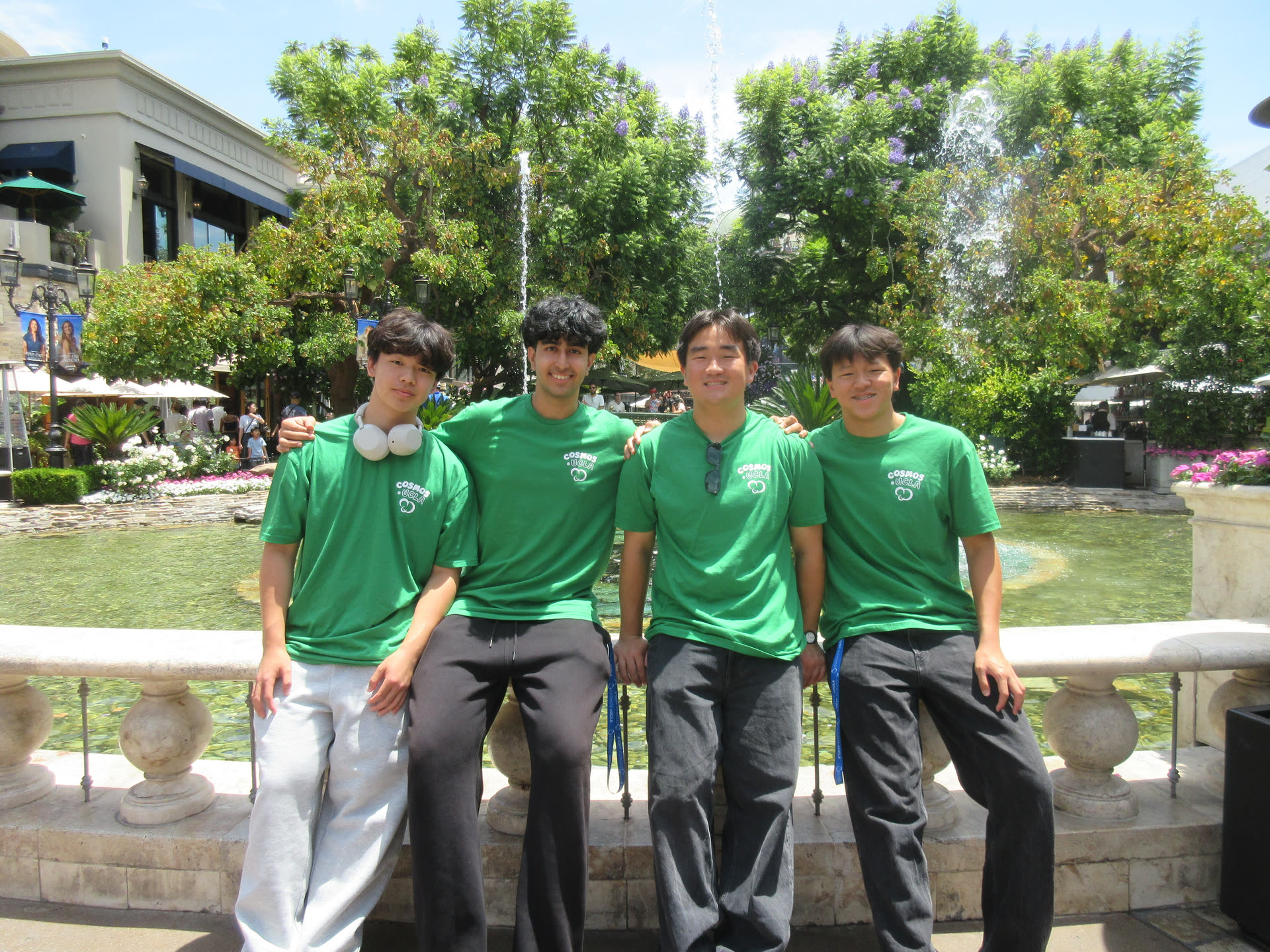
The program mixed long sessions of debugging and analysis with a cohort living, learning, and exploring UCLA together. The result was equal parts research sprint and shared summer experience.

A research summer that changed how I think about evaluating intelligent systems.

Return to the full portfolio