01
Practice
Build a library of patterns
Past contests became a training ground for recognizing graph structure, designing states, proving complexity, and writing reliable code without losing time to avoidable errors.
Programming
USACO · CodeWars · Hackathons
Competitive programming turns abstract algorithms into decisions made under a clock. I learned the craft, then rebuilt a club around teaching it.
The discipline
I have programmed for six years and competed for three, training in Python and Java across graph algorithms, dynamic programming, and implementation-heavy problems.
Qualifying for USACO Gold was one milestone. Learning to explain a solution clearly enough for a teammate or a new club member to use it became the more valuable skill.
Gold
USACO division
2nd
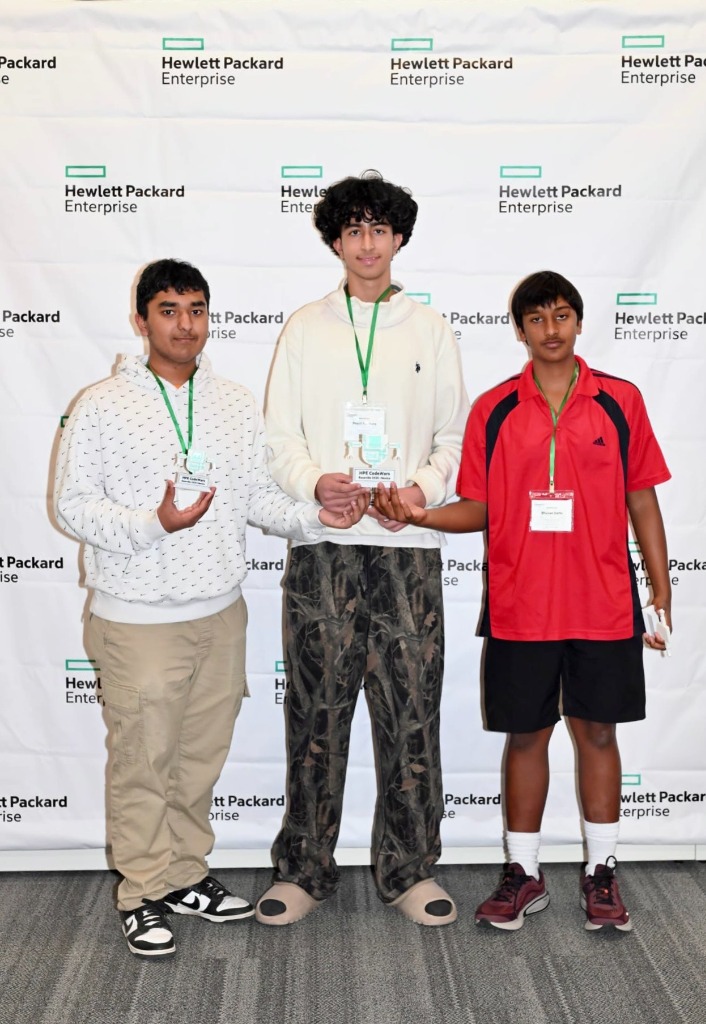
HPE CodeWars regional finish
6 years
Programming
Field notes
01
Practice
Past contests became a training ground for recognizing graph structure, designing states, proving complexity, and writing reliable code without losing time to avoidable errors.
02
Compete
NASA Space Apps, HPE CodeWars, and the YoungWonks National Coding Challenge added collaboration to the clock. Our teams earned a NASA Global Nominee and a second-place regional finish at CodeWars.
03
Lead
As president, I rebuilt a casual Coding Club into the Competitive Programming Olympiad Club, with weekly practices, live Python and Java solutions, and organized teams for all four USACO contests.
The room
At a school where many STEM students lean toward medicine, the club became a home for students who wanted to stretch themselves in computer science and learn from one another.
Visual archive
The fastest solution matters less if no one else can understand it. The best teams do both.
Return to the full portfolio